

I started scooping Vital Proteins Collagen Peptides into my coffee back in January, mostly because my daughter left an unopened tub at my house after Christmas and I felt guilty letting it go to waste. I was skeptical. I've watched enough of these powders come and go from my kitchen counter to know that most of them get used for three weeks and then sit behind the flour until I finally toss them out. This one didn't. Six months later, the tub is still on the counter, and I want to tell you plainly what changed and what I'm still not sure about.
I'm sixty two, and my skin has done what everyone's skin does by this age. It's thinner than it used to be, it bruises easier, and it doesn't bounce back from a hard week the way it did at forty. My hands ache some mornings after a weekend of weeding the garden beds. None of that is a diagnosed condition, just ordinary wear from ordinary living. I wasn't expecting a collagen powder to reverse any of it, and I want to be upfront that it hasn't. What it has done is become one of the few supplement habits I've actually kept for six straight months, which by itself tells you something.
Before I go any further, I want to be clear about what I'm reviewing and what I'm not. This is a food supplement, not a treatment for anything, and I'm not a doctor. Ingestible collagen like Vital Proteins gets talked about online as if it's a settled science, and it isn't. Some studies suggest a modest benefit for skin and joint comfort, others show little to nothing, and the honest answer for any one person is that you won't know until you try it for months, not days. I went in wanting a fair, unhurried test, not a verdict by week two.
The Quick Verdict
An easy habit that dissolved well and never upset my stomach after the first week, but the skin and joint changes were subtle enough that I honestly can't separate them from the extra water and better sleep I picked up around the same time.
Amazon Check Today's Price →Still Deciding If a Daily Scoop Is Worth It?
Here's exactly what I noticed, and didn't, after six months of using it every morning, plus what's worth checking on the label before you buy.
Amazon Check Today's Price on Amazon →How I've Used It
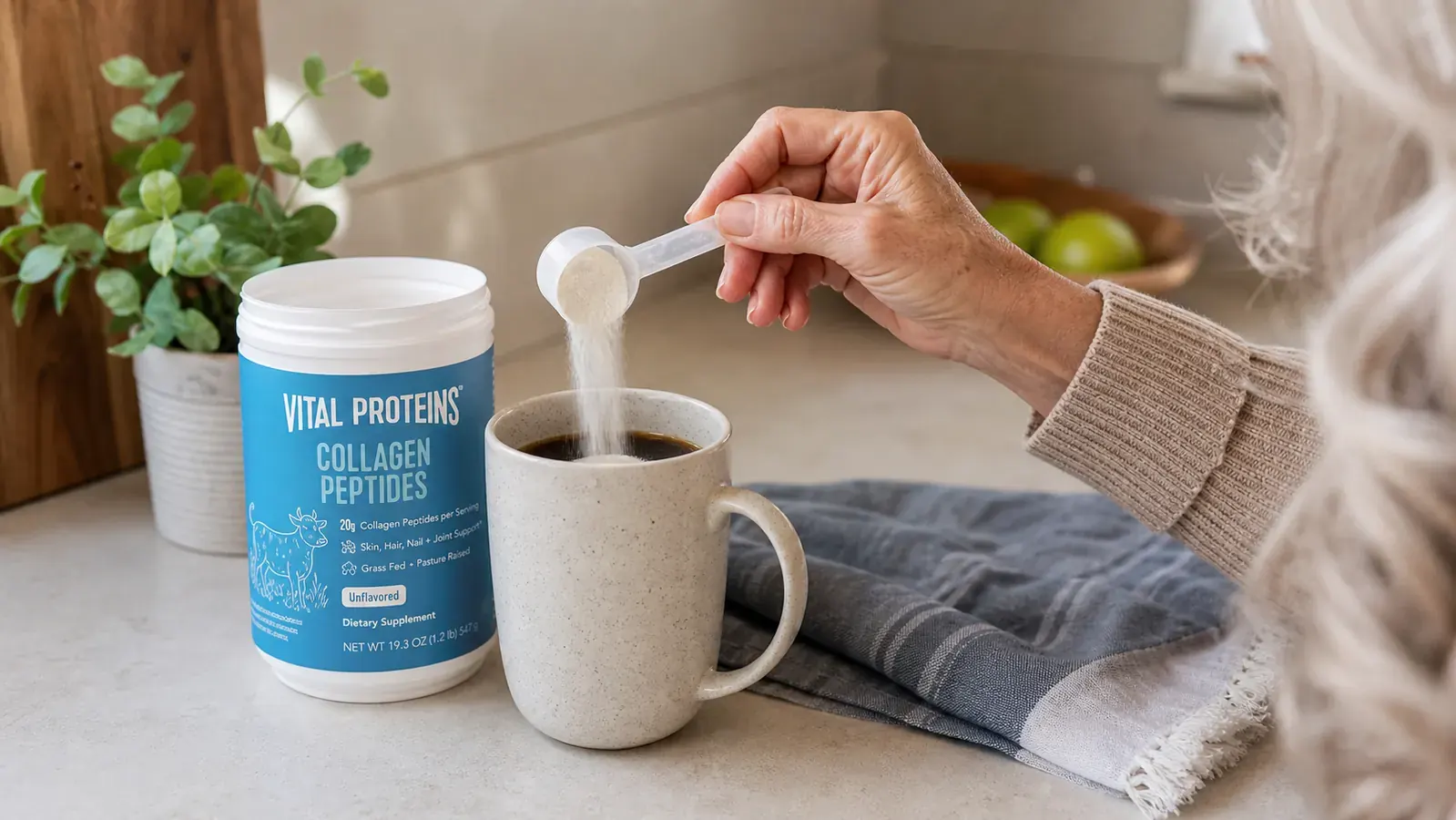
My routine has stayed almost embarrassingly simple. One scoop, about twenty grams, stirred into my first cup of coffee most mornings. On the mornings I skip coffee I've mixed it into warm oatmeal instead, which works about as well. I never bothered timing it around meals or worrying about whether I took it with food, because nothing in the way I felt suggested it mattered. If you're looking for a routine that requires discipline, this isn't going to test you. That's part of why Vital Proteins lasted on my counter when so many other tubs and jars haven't.
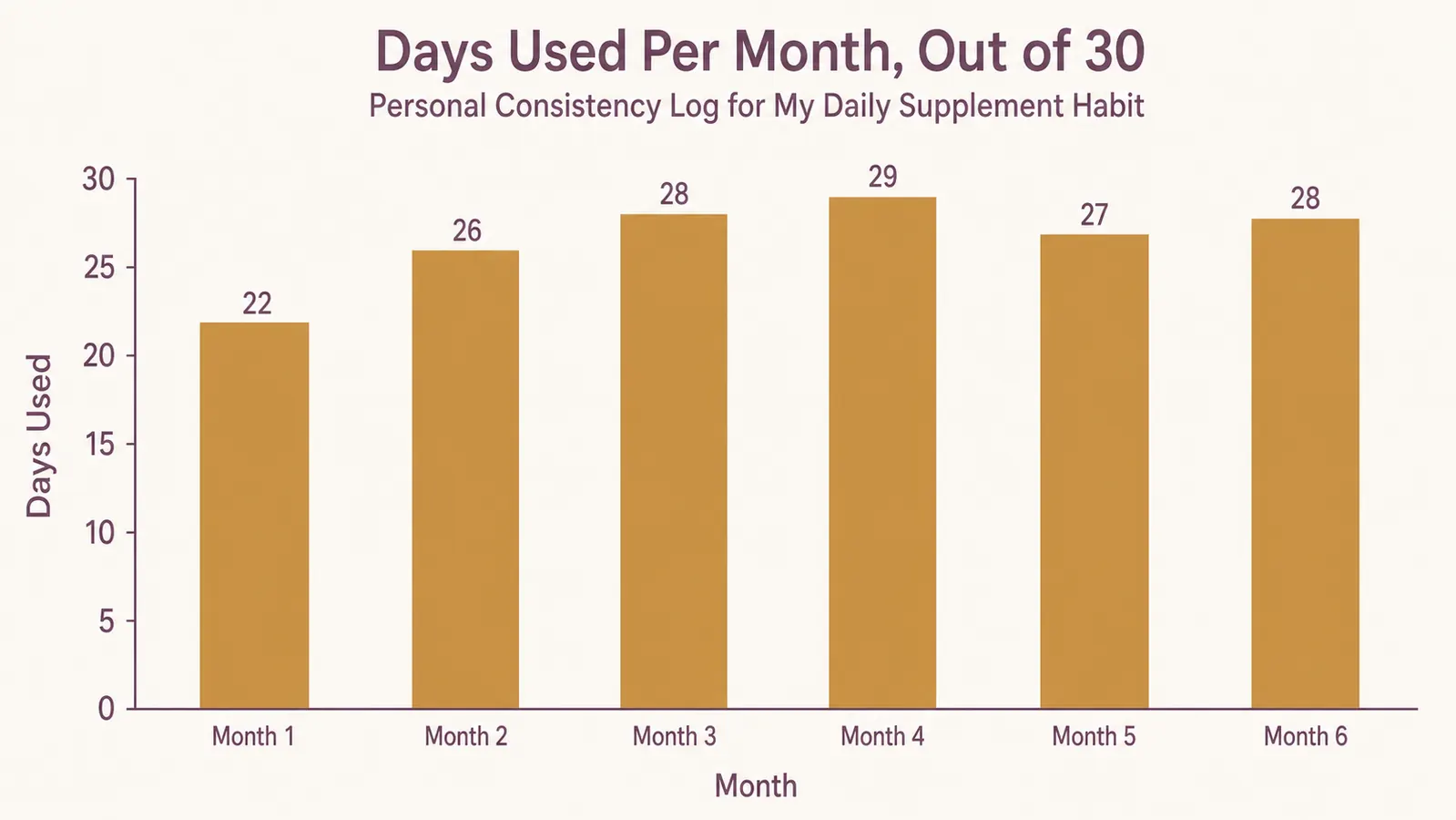
I kept a rough tally on my kitchen calendar because I wanted an honest answer for this article, not a guess. Month one I used it twenty two of thirty days, which is realistic for anyone building a new habit around a holiday tub someone else bought. From there it settled into a real pattern: twenty six days in month two, twenty eight in month three, twenty nine in month four, twenty seven in month five, twenty eight in month six. That's roughly six mornings out of seven, which is more consistency than I've managed with almost anything else on my counter. If you want a plan for working a scoop into your own morning without overthinking it, this step-by-step routine is the same one I ended up following.
The unflavored claim on the Vital Proteins tub held up. In hot coffee it dissolved completely within a few stirs, no grit, no film on top, no change to the taste I could detect. In cold liquids it needed a longer stir or it left a faint gritty texture at the bottom of the glass, which is a minor thing but worth knowing before you plan on tossing it into iced tea and walking away.
What's Actually in the Tub
The ingredient list on Vital Proteins is short, which I appreciated. It's grass-fed, pasture-raised bovine collagen peptides, hydrolyzed so it dissolves in liquid instead of clumping like gelatin, and that's essentially the whole list. No added flavors, no sweeteners, no filler ingredients I'd need to look up. For someone who reads labels more carefully than she used to, a one-ingredient tub is easy to trust in the sense that there's nothing hidden in it, even if a short label doesn't by itself tell me anything about whether it works.
It's worth remembering this is a protein supplement, not a vitamin. A scoop carries a meaningful dose of protein, and I noticed that on days I added it to a light breakfast I stayed satisfied a bit longer, which is a practical benefit separate from anything to do with skin or joints. It's also not vegan or vegetarian, since it's sourced from bovine hide, so if that matters to you it rules this one out regardless of anything else in this review.
What Changed, and What I Genuinely Can't Credit to It
I want to be careful here, because this is exactly the kind of claim that gets oversold. My skin did not transform. What I noticed, gradually and without a specific date I could point to, is that the skin on the backs of my hands felt a little less papery by early spring. That's a soft, subjective observation from someone looking at her own hands every day, not a measurement, and the research on ingestible collagen and skin is genuinely mixed. Some people notice a difference. Some don't. I'd put myself in the modest, hard-to-prove-it-was-this-and-not-something-else camp, and I'd rather tell you that than promise you a timeline I can't back up.
My hair and nails were the categories where I noticed the least, honestly. My nails grow at the same rate they always have and chip the same way they always have. My hairdresser hasn't said anything different at my last two appointments, and I asked her directly. I'm including that because a review that only reports the flattering parts isn't an honest one, and it isn't the review I'd want to read myself.
The joint comfort question is the one I get asked most, since I mentioned the gardening aches up front. Over six months, those mornings after a heavy weekend in the yard did feel somewhat easier, but I also started stretching before I kneel in the beds and I've been drinking noticeably more water since I started this habit, since stirring a scoop into a glass reminds me to actually drink it. I can't isolate the collagen from those other changes, and I won't pretend I can. If you want the fuller list of what people generally report and why, this rundown of the common reasons people add collagen peptides after fifty lays it out without overpromising, which is the tone I'd trust here too.
Setting Expectations Before You Start
If I could tell a friend one thing before she bought her first tub of Vital Proteins, it would be this: give it real months, not weeks, and don't expect a single dramatic change you can point to in the mirror. Ingestible collagen isn't a topical, it isn't a medication, and nothing about it acts fast. My own experience matched what I'd read going in, small and gradual at best, and I've talked to enough other women my age to know results are genuinely individual. Some people report more, some report nothing at all, and I don't think either of those experiences is wrong.
I also think it's fair to separate the habit from the hope. Even if I set aside every claim about skin and joints, having a reliable source of extra protein first thing in the morning, one that dissolves cleanly and doesn't ask much of me, has been worth keeping on its own. That's a lower bar than the marketing usually sets, but it's the honest one. For a more unfiltered rundown, including the parts of this that annoyed me before I got used to them, my fuller honest review goes into more of the day-to-day friction.
The Tradeoffs Nobody Mentions
A five ounce tub of Vital Proteins runs out faster than you'd think once you're using a full scoop daily, roughly three weeks per tub in my experience. I've settled into keeping two tubs on rotation so I'm never caught without one, which is a small logistics thing but worth planning for rather than discovering when you're out.
The first week, I noticed mild bloating on a couple of mornings, nothing dramatic, and it settled on its own once my system adjusted. I've read enough comments from other users to know this happens to some people and not others, so it's worth starting with a half scoop for the first few days if your stomach tends to be sensitive to new supplements.
And because it's genuinely unflavored, it takes on whatever it's mixed into rather than adding anything of its own. That's a feature in coffee and oatmeal. It's less pleasant stirred into plain water, where there's nothing to mask the faint chalky note that shows up if you don't drink it fairly quickly after mixing.

Other Collagen Powders I Considered
Before committing to a second and third tub of my own, I looked at a few cheaper alternatives on the shelf next to it, including Purely Inspired's collagen powder, which runs noticeably less per container. I put the two head to head on solubility, taste, and sourcing transparency in a separate comparison, and the short version is that Vital Proteins dissolved more cleanly and had a shorter, clearer ingredient list, though the price gap is real and worth weighing for yourself.
What kept me buying Vital Proteins specifically was the sourcing detail on the label, grass-fed and pasture-raised spelled out rather than implied, and the fact that it never once left grit in a hot cup of coffee across six months of daily use. Small things, but they're the kind of small things that decide whether a tub gets refilled or quietly retired.
What I Liked
- Dissolves completely in hot liquids with no grit or clumping
- Genuinely unflavored, doesn't change the taste of coffee or oatmeal
- Short, clear ingredient list with grass-fed sourcing stated plainly
- Easy to sustain daily, twenty eight days a month in my six-month log
- No stomach upset after the first week of adjustment
Where It Falls Short
- Runs out in about three weeks at one scoop a day
- Mild bloating for some people during the first several days
- Leaves faint grit in cold liquids if not stirred thoroughly
- Not vegan or vegetarian, sourced from bovine hide
- Skin, hair, and joint changes were subtle and hard to attribute solely to it
Six months in, the tub is still on my counter instead of behind the flour, and for a supplement that's the only verdict that matters to me.
Who This Is For
This makes the most sense for someone who already has a daily coffee, tea, or oatmeal habit and wants to add one simple thing to it without overhauling their morning. It's also a reasonable fit if you're someone who reads labels and wants a short ingredient list you can actually pronounce, and if you're going in with realistic, modest expectations rather than hoping for a dramatic before-and-after.
Who Should Skip It
If you're vegan or vegetarian, this is off the table regardless of anything else, since it's a bovine-sourced product. If you're hoping for a fast, visible result by a specific date, I'd manage that expectation before you buy anything in this category, ingestible collagen included, since the evidence is mixed and results vary a great deal from person to person. And if a tub running out every three weeks feels like an annoying recurring purchase rather than a habit you'll enjoy keeping, it's worth being honest with yourself about that before you start.
Ready to See If It Earns a Spot on Your Counter Too?
Six months in, mine hasn't gone behind the flour yet. If you want to try the same one I've been using every morning, here's where to find it.
Amazon Check Today's Price on Amazon →