

The jar sat in my cupboard for almost three weeks before I used it the first time. Not because I forgot. Because I kept waiting for a morning that felt like the right one to start something new, and at sixty-one those mornings don't announce themselves the way they used to when starting something new felt automatic. What finally got me moving was realizing I'd been overcomplicating a scoop of powder. I opened a container of Vital Proteins Collagen Peptides, the unflavored kind, dumped a scoop into the coffee I was already making, stirred it in, and drank it. That was the whole ceremony. Months later, it still is.
If you've bought a tub of collagen peptides and it's sitting exactly where mine sat, unopened on a shelf, gathering the same dust as good intentions do, this is the guide I wish someone had handed me on day one. Not the marketing copy on the label, not a list of ingredients you'd need a chemistry background to evaluate, but the actual mechanics: how much to use, what it dissolves in without a fight and what it fights you on, whether hot or cold liquid matters, how to keep the habit alive past the first two weeks, and how long you genuinely need to keep at it before you're allowed to have an opinion about whether any of it did anything.
Start with the one most people actually finish the jar of
Unflavored, dissolves in a normal cup of coffee, no aftertaste to talk yourself out of. Check today's price on Amazon before you commit to a routine around it.
Amazon Check Today's Price on Amazon →Step 1: Pick One Time of Day and Attach It to Something You Already Do
Don't build a new ritual around this. Borrow an old one that's already bolted into your day and let the new habit ride along for free. The habit that survives past week two is almost never the one that requires remembering to do something extra. It's the one riding on the back of something you were already doing anyway: the first cup of coffee, the bowl of oatmeal you microwave every weekday before work, the smoothie you already blend on Sunday mornings before the grandkids come over.
Pick exactly one of those and decide, out loud if it helps, that this is where the scoop lives now. Not "sometime in the morning." A specific cup, a specific bowl, a specific few minutes you're already spending. I chose coffee because I never skip coffee, not once, not on vacation, not on the mornings I skip everything else on my list. That reliability matters more than picking the theoretically ideal time of day. There's no research suggesting collagen peptides need to be taken at a particular hour to matter, so let convenience decide instead of guessing at biology you can't actually verify at home.
A small trick that helped more than I expected: I keep the Vital Proteins jar physically next to the coffee maker, not tucked into a cabinet with the vitamins. If I have to open a cupboard door to remember something exists, I forget it exists within about four days flat. Visibility did more for my consistency over the first month than any reminder app or sticky note I tried, and I tried a few before I gave up and just moved the jar.
Step 2: Know the Actual Scoop Size Before You Guess at It
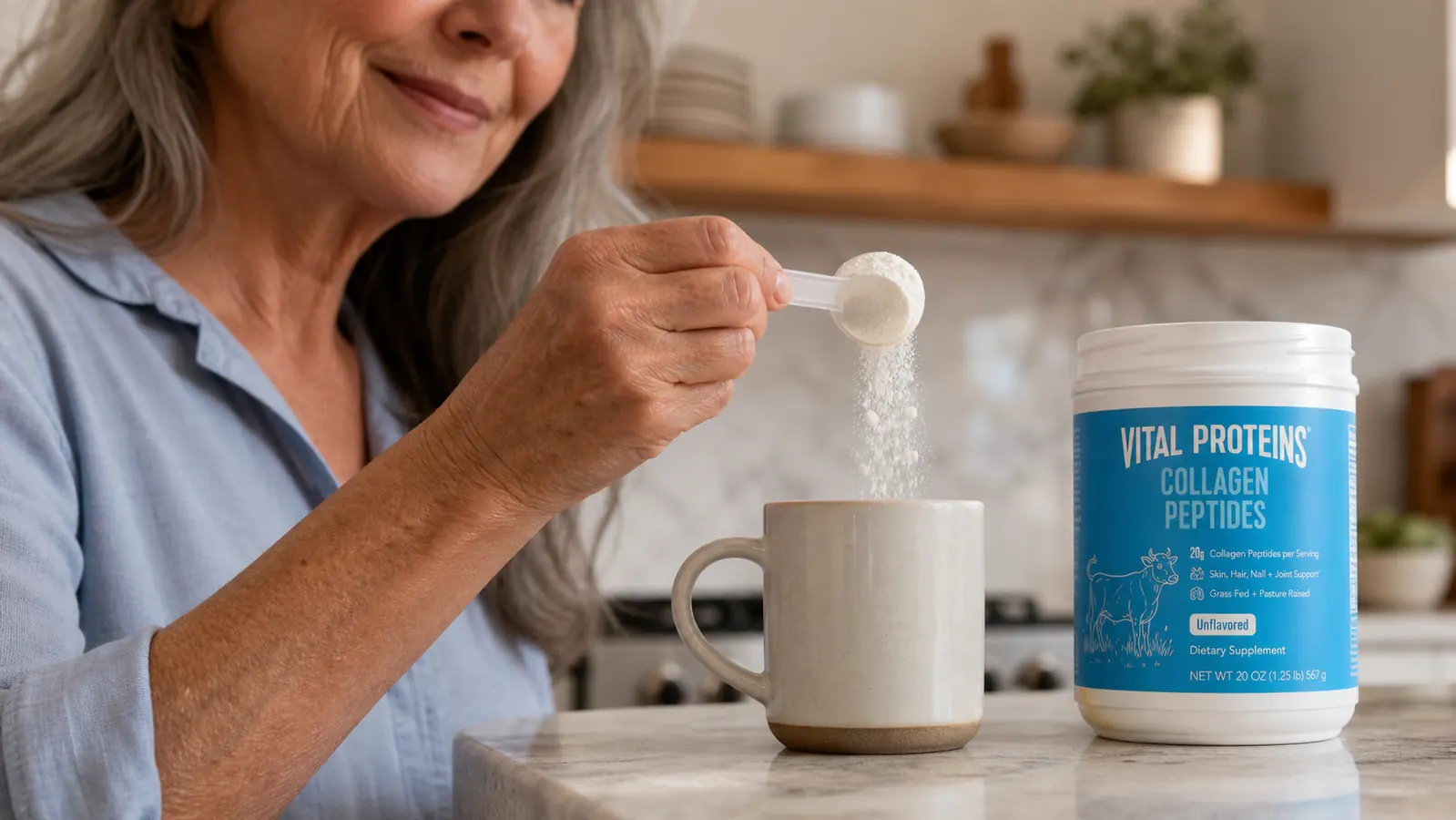
The Vital Proteins tub comes with its own scoop tucked inside the powder, and one level scoop is the serving the label is built around, roughly twenty grams. Don't eyeball it with a spoon pulled from your silverware drawer, and don't heap it the way you'd heap sugar into a mug. A level scoop, run flat across the top edge of the jar to knock off the excess powder, is what the seven servings printed on that five-ounce container are actually counting on. Guess higher and you'll run out of jar two weeks early and wonder where it went.
If this is your first week, there's nothing wrong with starting at a half scoop for a few days, just to see how your stomach handles a new powder added to your coffee or oatmeal. Most people move up to a full scoop within a week without any issue at all, but there's no prize for rushing it and no downside to easing in. I did a half scoop for four days out of nothing more than plain caution, then moved to a full scoop and never thought twice about it again.
One thing worth saying plainly, because it's the mistake I see people make once they decide they're committed: more is not a shortcut. Doubling the scoop doesn't double anything meaningful, it just means the jar empties twice as fast and your monthly cost climbs for no real benefit. Stick to the labeled serving size unless your doctor has specifically told you otherwise for a reason particular to you.
Step 3: Match the Liquid to the Temperature, Because This Is Where Most People Get Frustrated and Quit
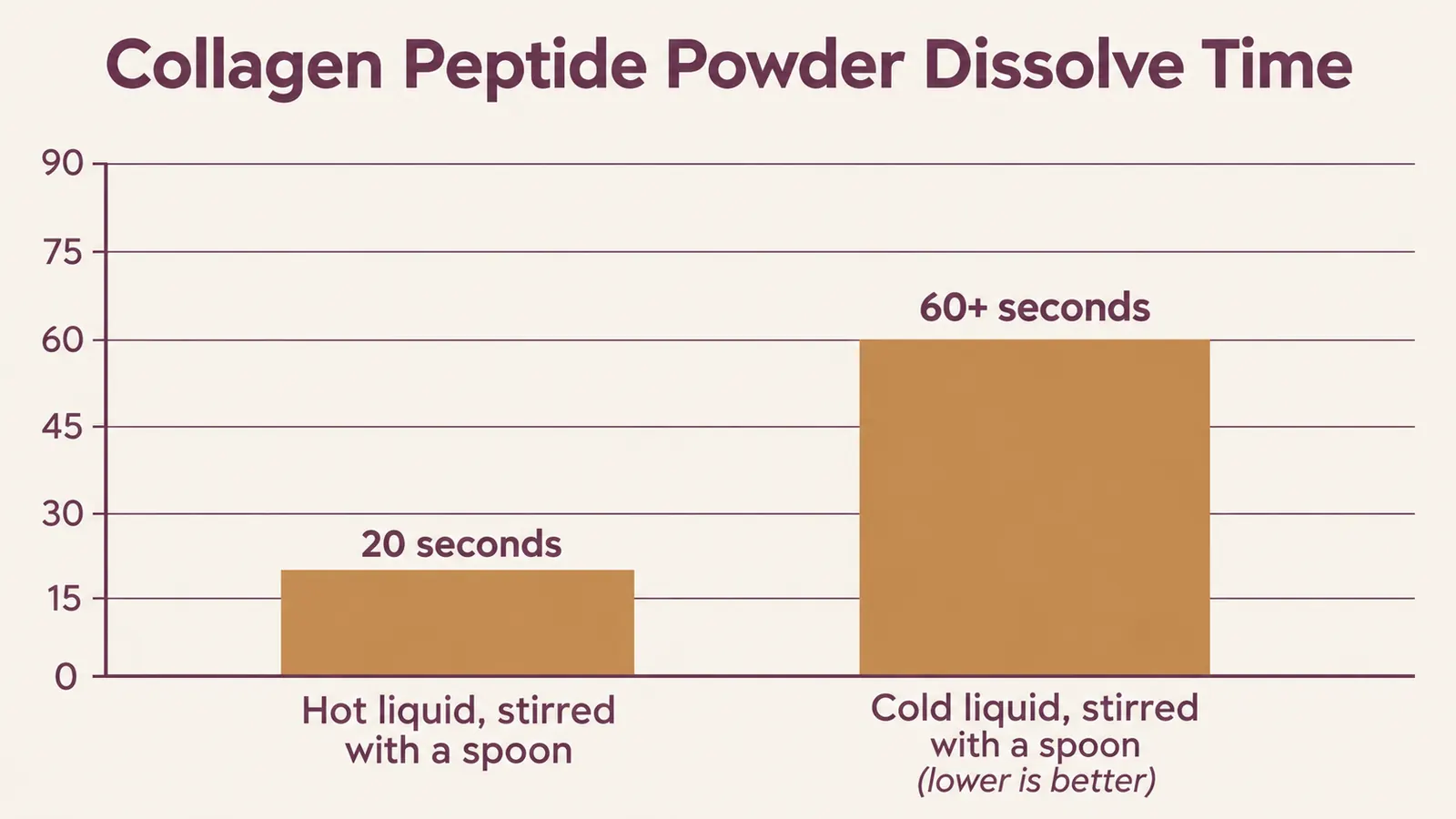
This is the step nobody warns you about on the label, and it's the reason so many half-full jars end up abandoned in the back of a pantry within a month. Collagen peptides are built to dissolve fastest and cleanest in hot liquid. In a mug of coffee or tea sitting around 150 degrees, a scoop disappears in about twenty seconds with an ordinary spoon and a few easy stirs. No grit on your tongue, no film on top, no floating clumps left behind to eye suspiciously before your first sip.
Cold liquid is a different story entirely, and it caught me off guard the first time I tried it in iced tea on a warm afternoon. Stir a scoop into a glass of iced water or a cold smoothie and give it just one stir with a spoon, the way you'd stir sugar, and you'll likely still see pale clumps sitting on the surface a full minute later. It isn't spoiled and it isn't a bad batch, it just needs more energy or mechanical agitation than a spoon alone provides at that temperature. If your habit lives in a cold smoothie, reach for a blender or a milk frother instead of stirring by hand, or the texture alone will convince you the product doesn't work when really it just needed a different tool for the job.
Oatmeal splits the difference nicely, since it's already hot and already being stirred as part of making it, so a scoop of Vital Proteins folds in without any extra effort or extra dishes. The same goes for soup, warm milk, or a mug of hot tea. Anything you're already stirring while it's warm is an easy, low-effort home for this, which is exactly why I've never once had to think hard about where the scoop goes on a given morning.

Step 4: Give It a Real Window Before You Decide Anything
This is the part I'll be straight with you about, because I think most of this category oversells patience it doesn't earn. The research on oral collagen peptides and visible skin or joint changes is genuinely mixed, and what shows up for one person's skin on a given timeline may not show up the same way, or on the same schedule, for someone else entirely. Nobody can honestly promise you a specific result by a specific date, and I'm not going to pretend that promise exists just because it would be easier to write. What I can tell you, from having done this myself and from talking to other women doing the same thing, is that a few days, or even two full weeks, isn't a fair trial for anything you're taking daily in small amounts. Most people who genuinely stick with a routine like this give it somewhere around eight to twelve weeks of consistent daily use before they even attempt to evaluate whether anything feels different.
Mark a real date on a real calendar, not a vague intention floating somewhere in the back of your mind. I wrote mine on a sticky note stuck to the fridge, the same place the Vital Proteins jar lives now next to the coffee filters. Eight weeks out from the day I actually started, I sat down and thought about it deliberately instead of guessing from memory, which is genuinely unreliable for something as gradual and easy to miss as this. If you want a longer, week-by-week account of what that stretch of daily use actually looked like for one person, including the parts that didn't change much at all, our six-month review of Vital Proteins Collagen Peptides walks through it honestly.
Step 5: Track What You Actually Notice, Not What You Hope to Notice
Memory is a poor scientist, especially when you want something to be working. If you're waiting eight or twelve weeks to judge a routine like this, you need a written note somewhere, not a mental impression that's easy to talk yourself into or out of depending on how your morning is going. I kept it embarrassingly simple: a running note on my phone with a date and one short line, sometimes about how my skin felt after a shower, sometimes about my knees on the stairs to the basement, sometimes just "nothing to report today." Boring entries are useful too. They keep you honest and keep you from retroactively deciding something happened that didn't.
Also track what you skip, which sounds strange but genuinely matters once you're looking back over two months of entries. If you traveled for a week and didn't have the jar with you, or if a stomach bug knocked out your routine for four days, write that down too. It explains gaps later and keeps you from concluding a routine failed when really it just didn't happen as consistently as you remember it happening.
What Else Helps
Collagen peptides are one input, not the whole equation, and I'd be selling you something false if I framed it any other way. Daily sunscreen matters more for how skin ages over the decades than almost anything you drink or scoop into a mug, and no supplement, Vital Proteins included, is a substitute for it. Getting enough water across the day and enough total protein from actual meals supports the same underlying structures a collagen supplement is aimed at, so the scoop works better as part of a fuller routine than it does as a stand-in for one. If you want the fuller case for why collagen keeps showing up in so many mature-skin routines in the first place, without the overselling, our roundup on why collagen peptides get recommended so often after fifty lays out the reasoning plainly.
The scoop that stays on the counter next to the coffee maker gets used. The scoop in the back of the cupboard just becomes a coaster for other decisions you keep putting off.
If you're ready to actually start instead of overthinking it
One scoop, one cup of coffee, one habit you already have. Check today's price on Amazon and put the jar somewhere you'll actually see it tomorrow morning.
Amazon Check Today's Price on Amazon →