
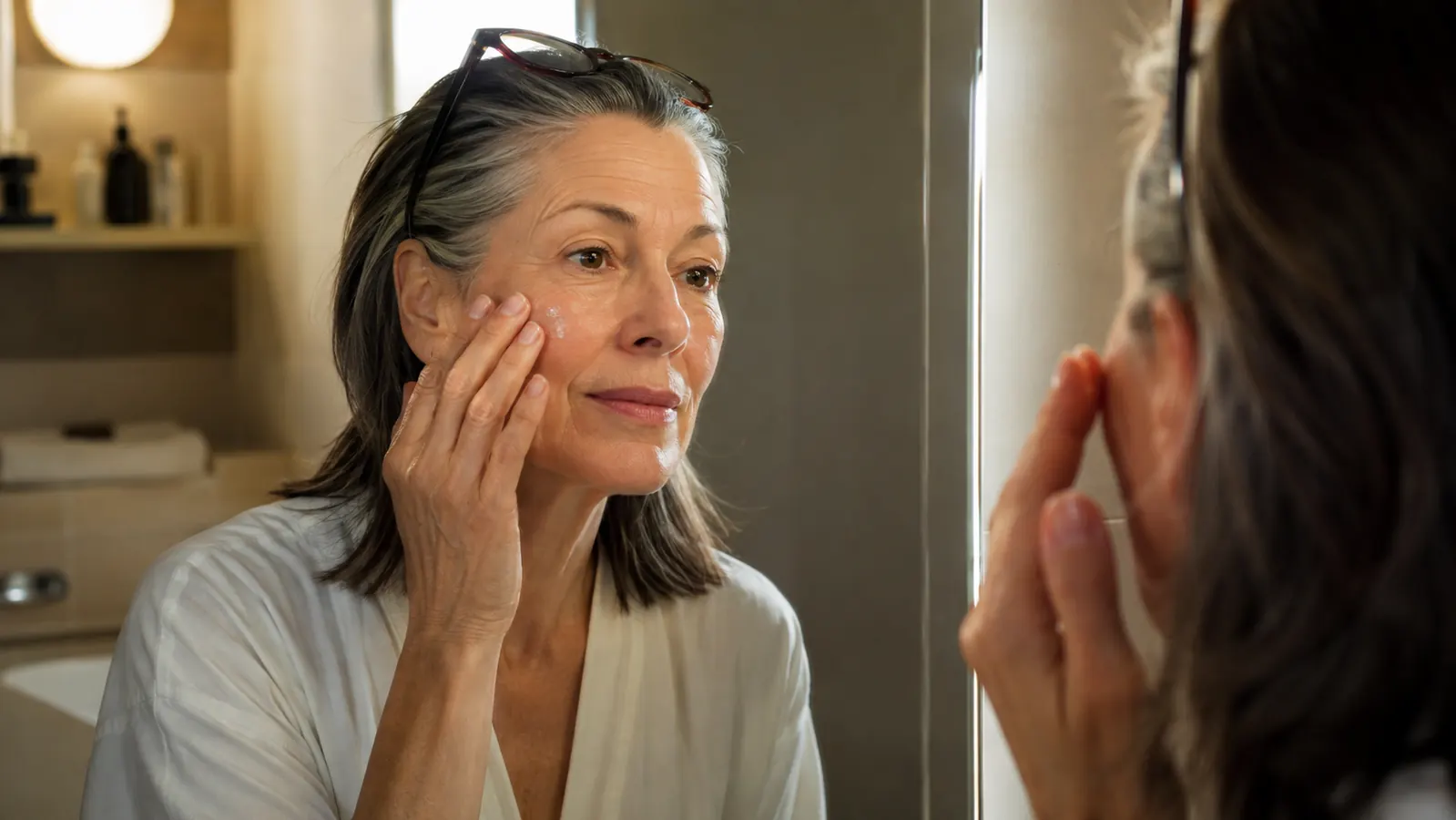
I started using retinol the way most of us do after fifty, which is badly. I'd read that it was about the closest thing skincare has to a proven ingredient, so I bought a jar, patted a full pump onto dry skin two nights running, and woke up on the third morning with a jaw that looked like I'd fallen asleep face-down on a heating pad. Red, tight, flaking along the sides of my nose. I put the jar in a drawer for four months out of spite.
Retinol works. That part isn't really in dispute, and I've written before about why retinol earns a place in a mature skincare routine even though it has a reputation for being harsh. The reputation is earned, but it's earned by people using it the way I did the first time, not by the ingredient itself. Skin after fifty is thinner, slower to repair itself, and less forgiving of a rushed introduction than it was at thirty. The fix isn't avoiding retinol. It's respecting the runway it needs. I use CeraVe's Resurfacing Retinol Serum now, and it took me close to two months of deliberately going slow before I could wear it five nights a week without so much as a pink cheek.
I'm sixty-two, and my skin these days runs a little dry no matter the season, which made that first failed attempt even harder to walk back from. It wasn't dramatic beyond the flaking, nothing that needed a doctor, but it was enough that I avoided the whole ingredient category for the better part of a year. That's the real cost of rushing it: not the bad week itself, but the retinol-shaped hole it leaves in your routine afterward.
Start With the Serum Built for a Slow Introduction
CeraVe's version pairs encapsulated retinol with niacinamide and ceramides, which gave my skin a gentler starting point than most drugstore retinols I'd tried before it. Check today's price on Amazon before you build your ramp-up schedule.
Amazon Check Today's Price on Amazon →Step 1: Patch Test for a Full Week Before It Touches Your Face
Retinol reactions don't always show up the first night. Mine took three. Before you put any retinol serum anywhere near your cheeks or forehead, dot a small amount, about the size of a grain of rice, on the inside of your forearm or just behind your ear. Do this once a night for five to seven nights and don't touch your face with it during that window.
You're watching for anything beyond mild, temporary pinkness: real swelling, hives, blistering, or itching that doesn't calm down within a day. If your forearm stays calm for a week, that's your green light to move to your face, though the face can still react differently than the arm since the skin there is even thinner.
I know a week feels like a long time to wait when you've already decided you want to try retinol. CeraVe recommends this same conservative, gradual approach for first-time retinol users, and impatience is exactly what nearly cost me the ingredient the first time around. A week is not a long time compared to the months you'll lose if a bad reaction sends you running from retinol altogether.
Do the patch test at night, not in the morning, even though it feels backwards to test something you'll eventually apply before bed anyway. Nighttime testing means you're not adding sunscreen, makeup, or a full day of city air on top of the reaction, so if something shows up you can tell it apart from anything else touching your skin that day.
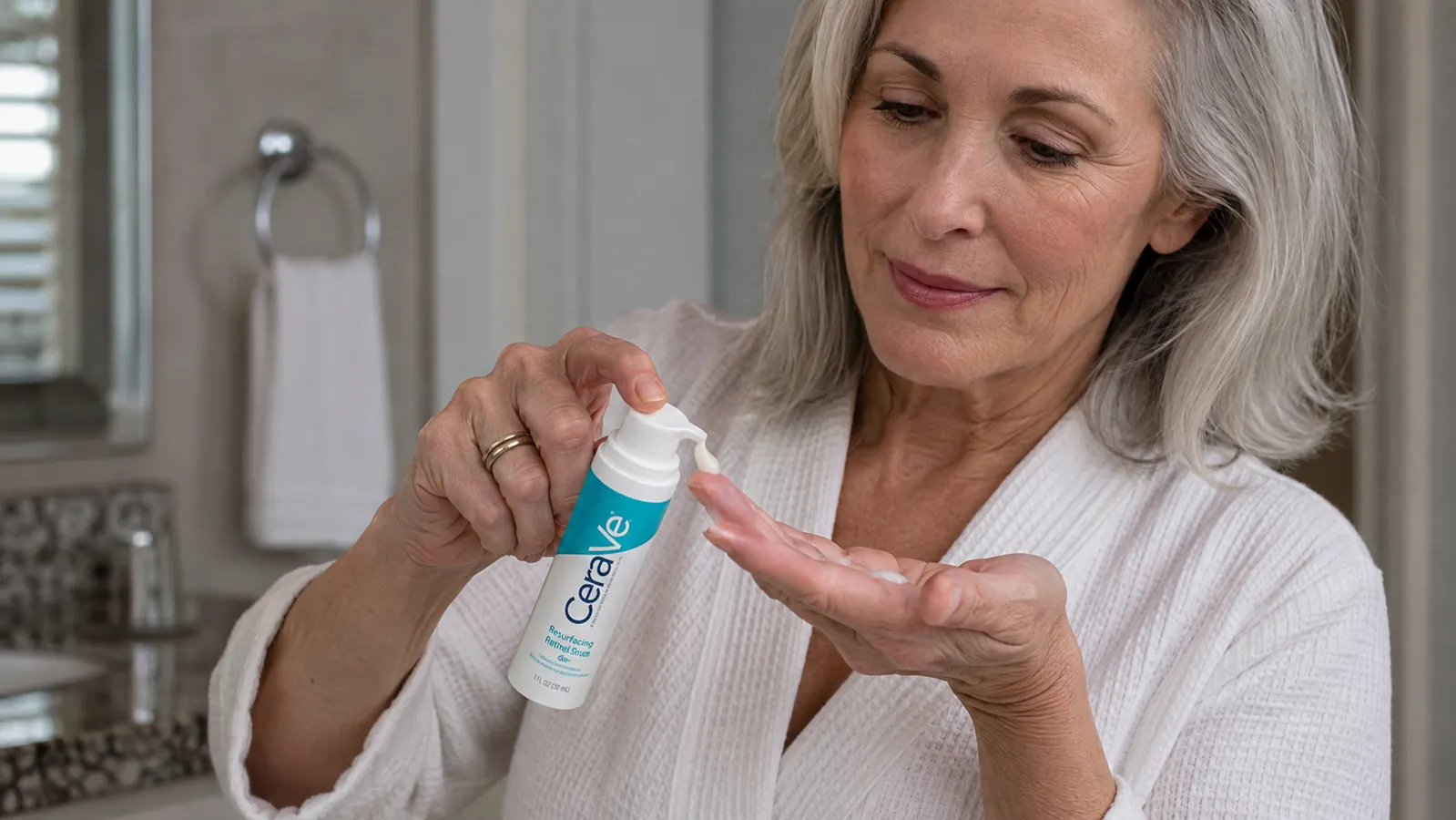
Step 2: Buffer It Instead of Applying It Straight to Bare Skin
Buffering means applying your moisturizer first, letting it sit for a few minutes, and then applying the CeraVe serum on top, or mixing a pump of moisturizer with your retinol in your palm before smoothing it on. Either way, you're diluting how much of the active ingredient reaches your skin barrier at once.
This was the single biggest change I made between my failed first attempt and the version that actually worked. CeraVe's serum already contains encapsulated retinol, which is designed to release more slowly than raw retinol, but buffering on top of that gave my skin extra room to adjust while it got used to the ingredient.
If your skin runs dry to begin with, or if you're perimenopausal and your skin barrier already feels thinner than it used to, buffer every single application for at least the first month. There's no rush to graduate off of it, and plenty of people I've heard from keep buffering indefinitely and still see the benefit.
You'll know buffering alone isn't enough if you're still seeing more than mild pinkness two applications in a row, even at the lowest frequency. At that point, drop back to the patch test step for another few days rather than pushing forward on the same schedule. There's no prize for finishing the ramp-up on a fixed calendar. The finish line is tolerant skin, not a specific week number.
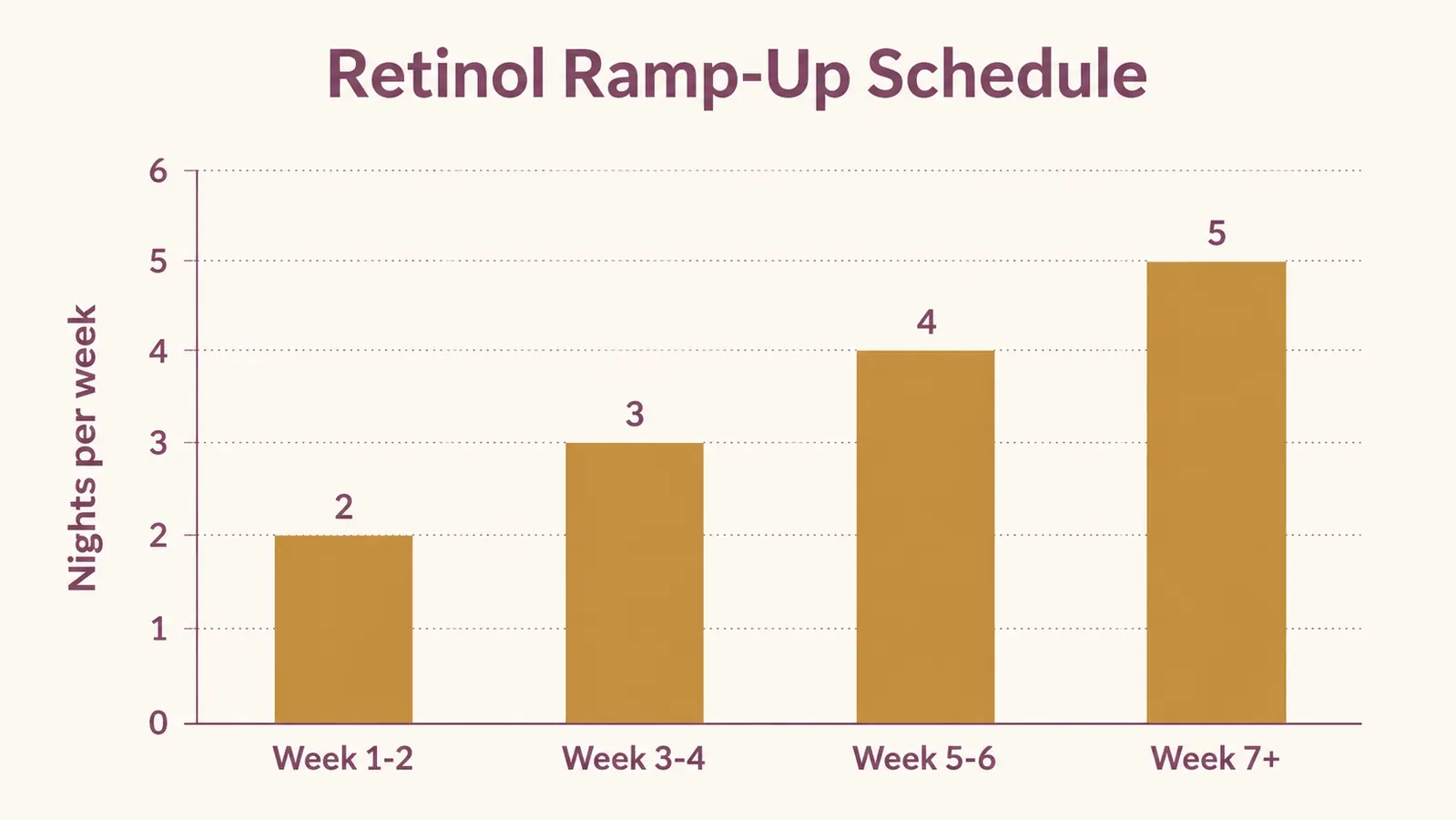
Step 3: Ramp Up Frequency Slowly, on a Real Schedule
Here is the schedule I wish someone had handed me the first time. Week one and two: two nights a week only, such as Monday and Thursday, with a full 48 hours between applications. Week three and four: three nights a week. Week five and six: four nights a week. From week seven on, if you've had no more than mild, brief redness along the way, move to five nights a week.
Write the days down somewhere you'll actually see them. It's easy to lose track and either apply it too often out of enthusiasm or forget it for two weeks and then treat that gap like you're starting from zero when you're not.
This ramp is slower than what's printed on most retinol packaging, including CeraVe's own instructions, which suggest most users can start two to three times a week. I'm not contradicting the label, I'm giving you the more cautious version for skin that's spent five or six decades building its current texture and tolerance. Slower has cost me nothing. It's the version that actually stuck.
If you miss a night, don't try to make it up by doubling the next application or squeezing in an extra night to compensate. Just pick the schedule back up where you left off. Retinol isn't cumulative in a way that punishes a missed Tuesday, and treating it like it is tends to be exactly how people talk themselves into applying it too often.
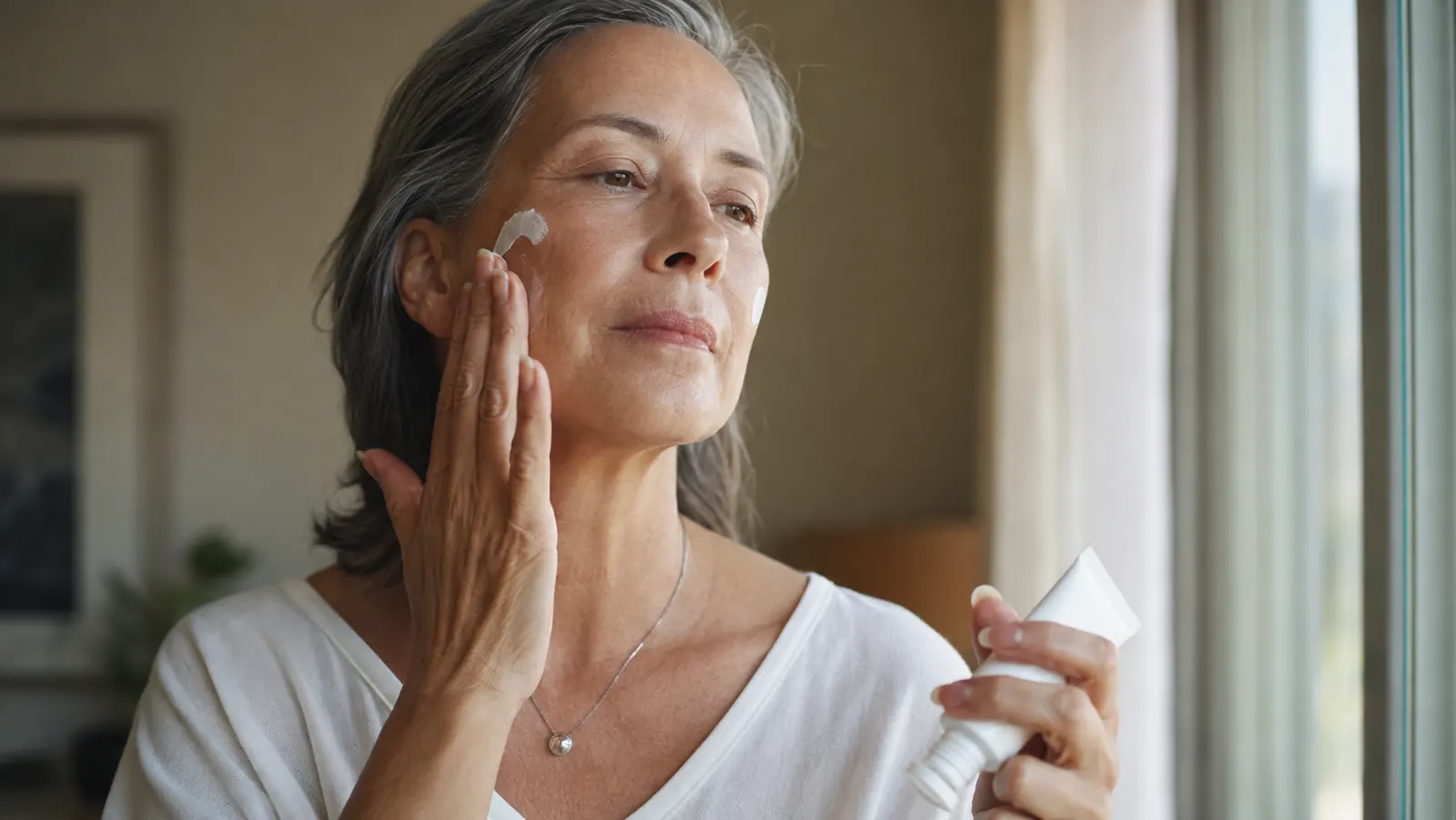
Step 4: Treat Morning Sunscreen as Part of the Retinol Routine, Not an Optional Add-On
Retinol makes skin more sensitive to sun, full stop, and that sensitivity doesn't announce itself the way a sunburn does. It shows up later as more visible sun spots and slower healing, which defeats the entire reason most of us started using retinol in the first place.
Every single morning after a night you've used the CeraVe serum, and honestly every morning regardless, apply a broad-spectrum sunscreen as the last step of your routine, reapplying if you're outside for more than a couple of hours. This isn't a scare tactic, it's just how the ingredient behaves. Skip this step and you can undo months of consistent retinol use in a handful of unprotected afternoons.
I keep a tinted mineral sunscreen on my bathroom counter, not in a drawer, because anything I have to go looking for is a step I'll eventually skip on a rushed morning.
A broad-spectrum sunscreen with at least SPF 30 is the baseline I'd look for, applied as the literal last step after moisturizer and before makeup, not blended in with anything else. If you're the type who forgets reapplication by early afternoon, a pressed mineral powder sunscreen is easier to reapply over makeup than a lotion, and I keep one in my bag for exactly that reason.
Step 5: Learn to Tell Purging Apart From a Reaction You Should Stop
Purging is a short, predictable wave of small breakouts or flaking in the first few weeks, as retinol speeds up cell turnover on skin that already had congestion sitting under the surface. It tends to show up in the same spots you'd normally break out and settles down within two to four weeks without you changing anything about your routine.
A reaction is different. It's burning that doesn't fade, swelling, blistering, a rash that spreads past where you applied the product, or redness that gets worse instead of better after several days off. If that happens, stop using the retinol entirely, not just cut back the frequency. Let your skin barrier fully recover, which can take one to two weeks, before deciding whether to try again at a much lower frequency, or not at all.
If a reaction includes real swelling, blistering, or symptoms that don't improve within a few days of stopping, that's worth an actual visit to a dermatologist or your doctor rather than more trial and error on your own. Retinol is not worth pushing through a reaction that severe, and a professional can tell you whether it's the retinol, something else layered into your routine, or a skin condition that needs its own separate treatment.
The closest I came to a real reaction rather than purging was around week five, a patch of redness along my jaw that didn't fade after two days off. I stopped completely, kept the area moisturized and free of anything active for about ten days, and started back at the very beginning of the schedule at half the frequency I'd been using. It held the second time. That's not a failure, it's just how skin over fifty sometimes needs a second, slower pass.
The people who quit retinol for good are almost always the people who started too fast. Slow is not the compromise. Slow is the method.
What Else Helps While Your Skin Adjusts
A simple routine makes the adjustment period easier to manage and easier to troubleshoot when something changes. Keep the rest of your nightly routine boring on purpose while you're ramping up retinol: a gentle cleanser, your moisturizer, and nothing else with active ingredients like exfoliating acids or vitamin C serums layered into the same routine, since stacking actives is the fastest way to lose track of what's actually causing irritation. A humidifier in the bedroom and a fragrance-free moisturizer both make the first month noticeably more comfortable, and neither one costs you any patience with the actual schedule above.
Skip layering retinol with benzoyl peroxide or other prescription retinoids in the same routine, since both work on similar pathways and combining them multiplies the irritation risk without multiplying the benefit. If your dermatologist has you on a prescription retinoid for anything else, mention that you're also using an over-the-counter retinol serum so the two don't end up stacked on the same nights by accident.
Once you've settled into a frequency your skin tolerates well, usually somewhere in that four-to-five-night range, I'd read through what half a year of consistent use actually looked like for me in my longer review of the CeraVe serum, since a single month tells you almost nothing compared to watching a product hold up over time.
Ready to Start the Slow Way, the Right Way
A patch test, a buffering habit, and a schedule you actually follow will get you further than any amount of enthusiasm on night one. Check today's price on the CeraVe Resurfacing Retinol Serum and start week one on a day you'll remember.
Amazon Check Today's Price on Amazon →