
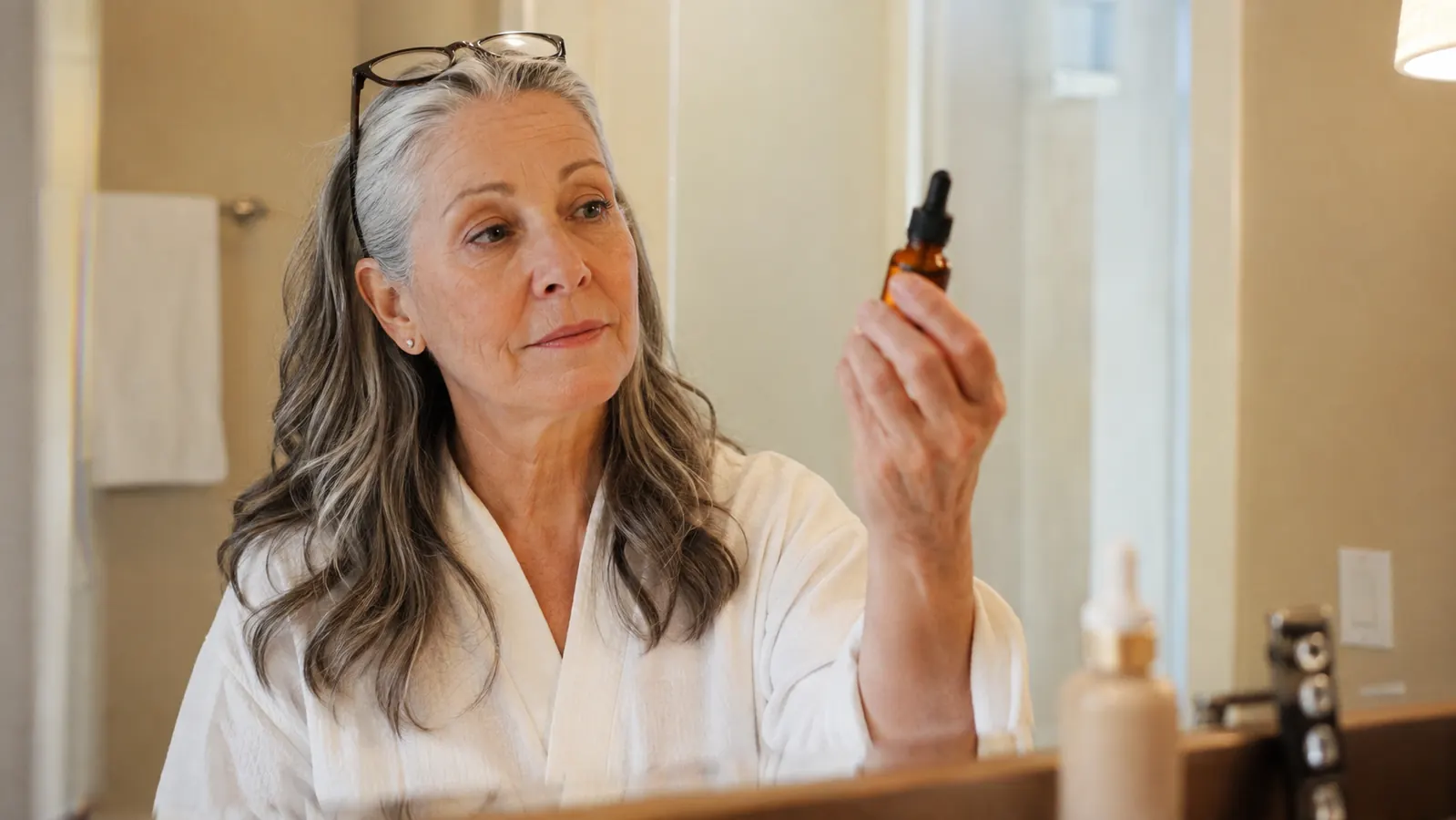
If you only have a minute, here is the short answer. CeraVe's Resurfacing Retinol Serum is the one I would hand to a friend who has tried retinol before and quit because her skin punished her for it. The Ordinary's Retinol 1% in Squalane is the one I would hand to a friend who already knows her skin tolerates actives well and wants more strength for less money on the shelf. I have used both, at the same time, on opposite sides of my own face, for six weeks, and neither answer changed my mind by the end of it.
My dermatologist, Dr. Patel, was not thrilled when I told her I was running a split-face test at home, but she agreed to let me report back rather than talk me out of it. CeraVe's serum went on my right cheek, The Ordinary's went on my left, three nights a week to start, moving up as each side tolerated it. I kept a small notebook by the sink, the same habit I use for every serum I test, and every number in this comparison comes from that notebook, not from memory after the fact.
I ran this comparison because I kept seeing the two named in the same breath online, one a drugstore staple with a niacinamide twist, the other a cult favorite known mostly for being cheap and strong. Nobody I found had actually tested them on the same face at the same time, so I decided to be the one who did, knowing full well my own skin at this age is not a lab and will not tell you everything yours would.
| CeraVe Resurfacing Retinol | The Ordinary Retinol 1% | |
|---|---|---|
| Texture | Light, faintly milky serum, sinks in within about a minute | Thin, watery consistency, needs a moment of patting to fully absorb |
| Formula strength | Encapsulated retinol, released slowly overnight for a gentler ramp-up | Straight 1% retinol in squalane, full strength from the first drop, faster acting |
| Barrier support ingredients | Niacinamide and licorice root extract included to calm skin alongside the retinol | Squalane only, no niacinamide or added calming ingredients in this formula |
| Dispensing | Pump top, one consistent press per dose, easy to manage with stiff morning hands | Glass dropper, harder to control the amount one-handed and prone to over-pouring |
| Strength ladder available | Sold in one formulation only, no lower or higher option to step between | Comes in 0.2%, 0.5%, and 1% versions, so you can start low and work up over months |
| Cost per ounce | Runs higher per ounce on current listings | Runs noticeably lower per ounce on current listings, prices shift so check today's before deciding |
| Scent | Fragrance-free with a faint medicinal note that fades within a minute or two | Fragrance-free, no detectable scent on either cheek during the six weeks |
| Irritation by week two (lower is better) | Manageable flaking along the nose, eased on a twice-weekly pace | More pronounced flaking and tightness, required dropping to once a week for ten days |
Where CeraVe Wins
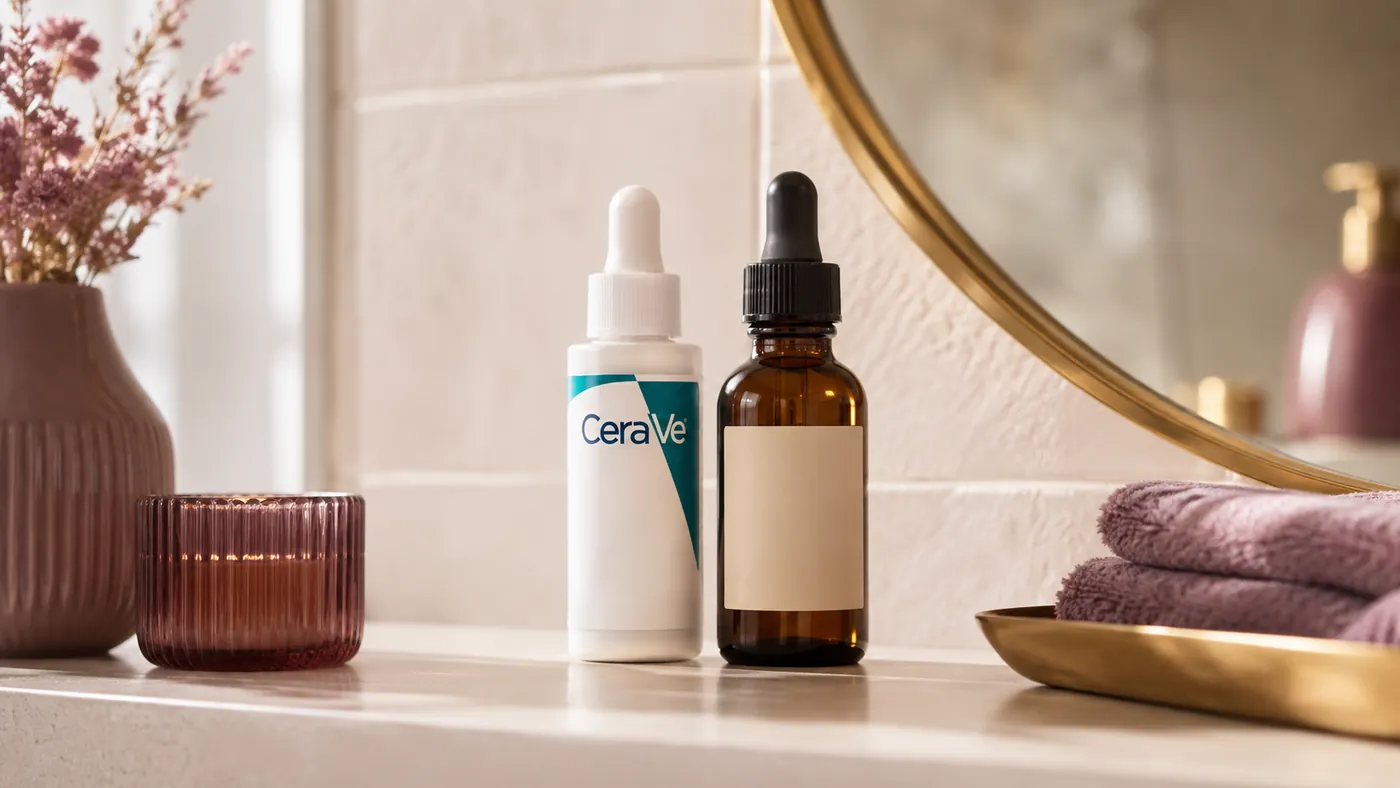
CeraVe's biggest advantage on my own face was how much easier it was to build up a nightly habit without my skin staging a protest. The niacinamide in this formula is doing real calming work alongside the retinol, and by week four I was using it five nights a week on the right side of my face while The Ordinary's side was still capped at three because of lingering tightness. If you have quit a retinol before, that gap matters more than any ingredient list, because a serum you cannot tolerate does nothing for you sitting half used in a drawer.
The pump also earned its keep in a way I did not expect to matter this much. My hands get stiff most mornings, and CeraVe's pump gives one clean, predictable dose every time I press it, no eyeballing required. The Ordinary's glass dropper asked for a steadier hand than I have some days, and twice in the first two weeks I squeezed out more than I meant to, which almost certainly made the irritation on that side worse than the formula alone would have. If the full ninety-day CeraVe review is any guide, that gentler entry point is the difference between a bottle that gets finished and one that gets returned.
There is also a livability side to this that spreadsheets tend to miss. CeraVe's serum layered under my regular night cream without balling up, sat fine under my pillowcase, and never once made my eyes water the way a stronger, unbuffered actives can first thing in the morning if you catch a whiff before it's fully absorbed. Small things, but at this stage of life I have learned that the products I actually keep are the ones that ask the least of me on an ordinary Tuesday night.
Where The Ordinary Wins
None of this means The Ordinary loses across the board, and I would be doing you a disservice to pretend it did. The straight 1% concentration works faster once your skin can handle it. By week five, the texture change on my left cheek, the side wearing The Ordinary, was slightly ahead of the right side, and the one dark spot near my temple looked a shade lighter first on that side, not the CeraVe side. If speed matters more to you than comfort during the adjustment, that is a real point in its favor.
The strength ladder is the other genuine advantage. The Ordinary sells 0.2%, 0.5%, and 1% versions, so someone brand new to retinol can start well below full strength and step up slowly over months, something CeraVe's single formulation simply does not offer. And on a pure cost-per-ounce basis, The Ordinary comes in lower on current listings, though prices move around enough that checking today's number before you commit is worth the thirty seconds it takes.
I will also say this for The Ordinary, plainly: it is not a poorly made product, and the people who swear by it are not wrong about what it can do. If you are the sort who reads a full ingredient deck before buying anything and wants nothing riding along with your retinol but a simple carrier oil, The Ordinary's no-frills approach will feel honest rather than sparse. It is a serious option, just a less forgiving one on the six-week clock I put it through.
Tired of Retinol That Punishes You Before It Helps You
If gentler entry and an easier nightly habit matter more to you than raw strength, CeraVe's Resurfacing Retinol Serum is the one that let me actually finish a bottle. Check today's price and current availability on Amazon before you decide.
Amazon Check Today's Price on Amazon →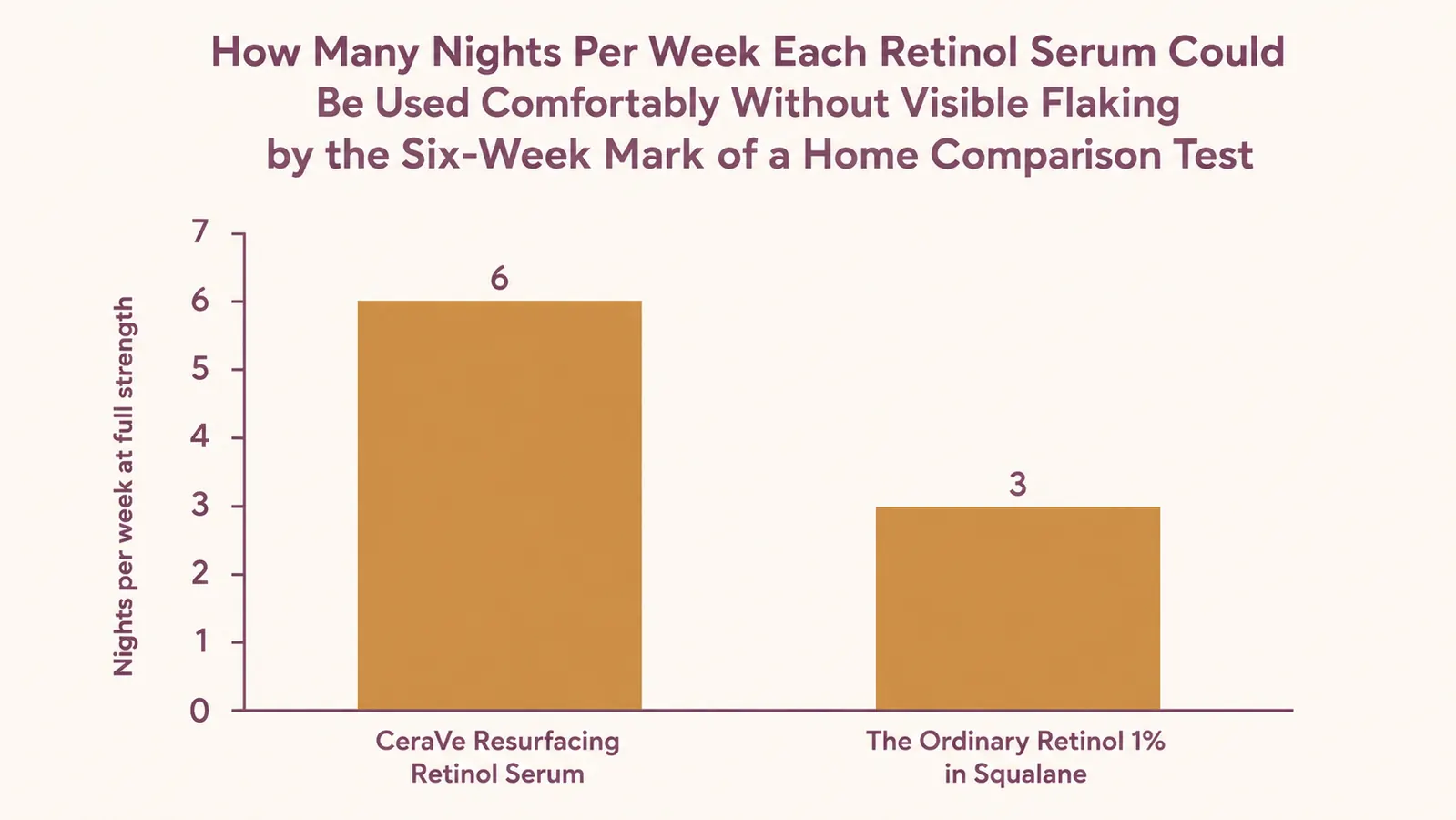
How I Actually Ran the Comparison
I want to be specific about the method here, because a split-face test is only useful if the two sides were treated fairly. Same cleanser both sides, same moisturizer both sides, same mineral sunscreen every morning regardless of which serum went on which cheek the night before. Three nights a week to start on both sides, moving up only when a side showed no flaking for four consecutive days, which is a rule I borrowed from Dr. Patel rather than anything printed on either box.
By the end of six weeks, the right side, CeraVe's side, was at six nights a week comfortably. The left side, The Ordinary's side, had climbed to three nights a week and was still not ready to go further without visible irritation the next morning. That gap is the single number I keep coming back to when people ask me which one to start with, because it is the closest thing I have to proof rather than opinion.
A Closer Look at What's Actually in Each Bottle
CeraVe leans on what it calls MVE technology, a delivery system that releases the retinol gradually overnight instead of all at once, paired with niacinamide and licorice root extract for calming and a touch of brightening. It is, in effect, a formula built around forgiving a beginner, and after six weeks of watching two cheeks respond differently to two different philosophies, I believe that is exactly what it does. The trade-off is that you are paying for the buffer as much as for the retinol itself.
The Ordinary's ingredient deck is short on purpose. Retinol, squalane as the carrier, and very little else, which keeps the price down and appeals to people who would rather not pay for extras they are not sure they need. There is nothing wrong with that philosophy, and squalane is a genuinely good, lightweight moisturizing oil on its own. What it is not doing is anything to soften the retinol's landing, which is exactly why my left cheek asked for more rest days than my right one did.
One thing both bottles have in common, and it is easy to overlook when you are busy comparing textures and pumps, is that either retinol will make your skin more sensitive to sun regardless of which one you pick. I wore a mineral sunscreen every single morning during the six weeks, on both cheeks equally, and I would not run this comparison again, or recommend either product to a friend, without saying that part out loud first. Retinol does its job at night. Sunscreen is what protects the progress you make while you sleep.
What the Irritation Actually Looked Like on Each Side
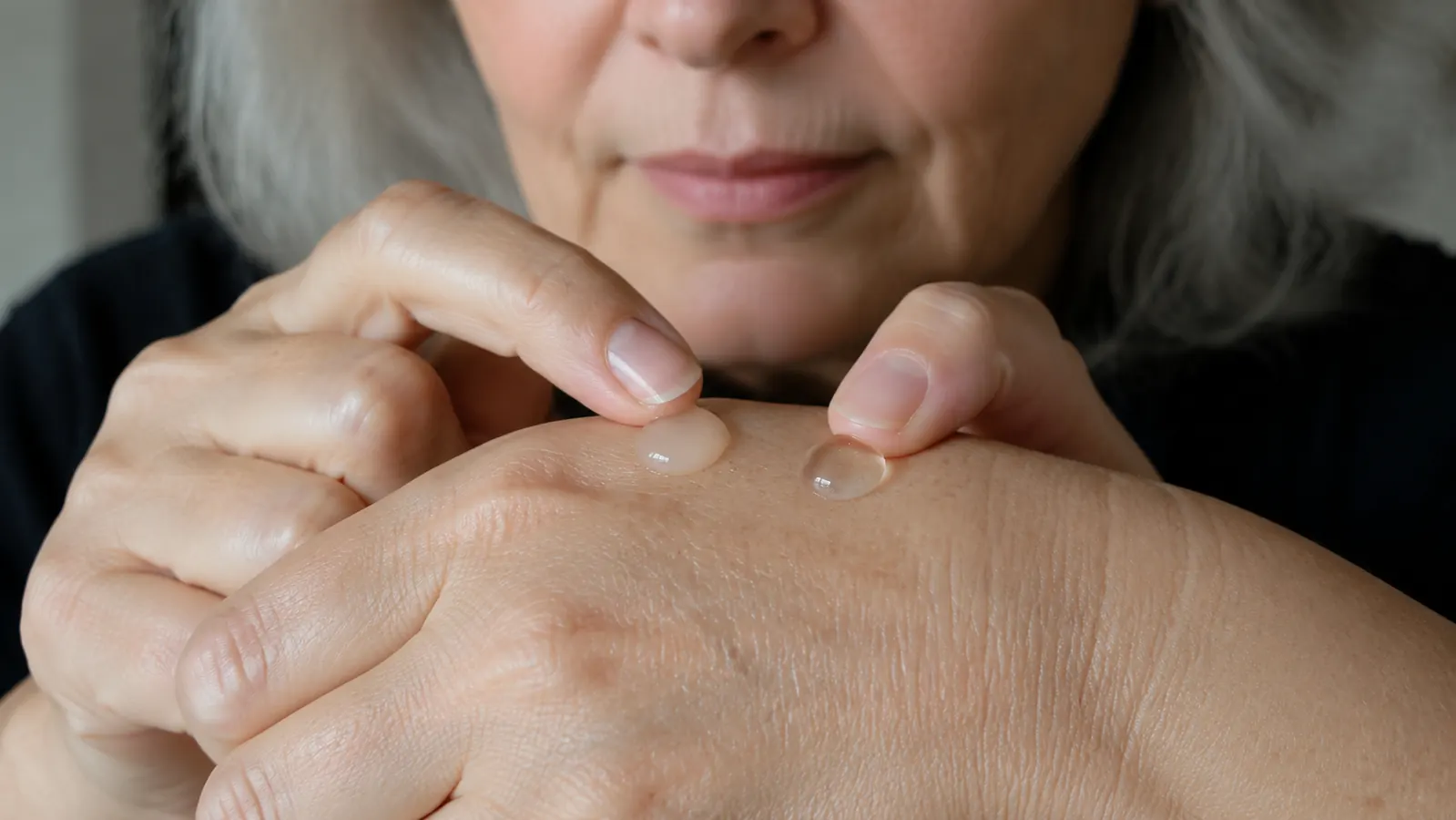
On the CeraVe side, irritation showed up as light, dry flaking along the edge of my nose starting around day four, peaking around day nine, and mostly resolved by day fourteen without me needing to skip more than one or two nights. It was uncomfortable but manageable, and I never felt like I needed to stop entirely.
On The Ordinary's side, the same window brought tightness across the whole cheek, not just around the nose, along with a patch of visible redness by day eight that I did not see on the CeraVe side at any point. I dropped that side to once a week for ten days to let it settle, which is exactly the kind of adjustment The Ordinary's box does not walk you through the way you might expect for a product this widely recommended online. It did eventually settle, and the payoff in texture came a little sooner once it did, but the road there asked more of my patience.
Who Should Buy Which
If you have quit a retinol before, if your hands are not as steady as they used to be, or if you would rather move slowly and actually finish a bottle than push hard and risk giving up in week two, start with CeraVe. It costs a bit more per ounce, but the pump, the niacinamide, and the gentler ramp-up add up to a product you are more likely to still be using three months from now, and that is worth reading more about if you're curious why dermatologists keep recommending retinol after fifty in the first place.
If you already know your skin tolerates new actives without much drama, want the option to step up strength over time, and care most about value per ounce, The Ordinary is a reasonable pick, especially at its lowest concentration to start. Just budget for a rougher first few weeks than CeraVe's side gave me, and go in with a plan for backing off if your skin asks you to. If you want the fuller, warts-and-all account of what those first two weeks felt like on the CeraVe side alone, I wrote that up separately in an honest review of the serum that almost got returned before it earned its place on my shelf.
Six weeks later, both cheeks look better than they did at the start, which is the least surprising finding in this whole comparison. But only one bottle is still sitting open on my counter three months on, and it is not the one that made me drop to once a week to calm down. That, more than any ingredient list, is the answer I keep giving friends who ask me which to buy first.
The Serum That Let Me Actually Finish the Bottle
Six weeks of testing both side by side left me reaching for CeraVe's Resurfacing Retinol Serum more nights than not. See today's price and check current stock on Amazon before you choose.
Amazon Check Today's Price on Amazon →